Some links on this page are affiliate links. If you buy through them we may earn a commission at no extra cost to you. How we make money.
Give your cat a tall, sturdy scratcher placed right next to the furniture they target, then make the furniture less appealing with protective covers or double-sided tape. Reward every use of the scratcher, keep nails trimmed, and never declaw.
Key takeaways
- Scratching is a natural need, so redirect it instead of trying to eliminate it.
- Choose tall, stable scratchers in materials your cat likes, and place them right beside the furniture being scratched.
- Protect furniture temporarily with covers, protectors or double-sided strips, and reward every scratcher visit.
- Trim nails regularly and consider soft caps as a bridge, not a replacement for scratchers.
- Never declaw. See a vet if scratching is sudden, excessive, or paired with paw problems or behavior changes.
Your cat is not scratching the sofa to spite you. Scratching is a built-in need: it stretches the back and shoulders, conditions the claws, and leaves both a visual and scent mark that says "I live here." You cannot remove the urge, but you can point it somewhere else.
The approach that works for most households has four parts: the right scratcher, in the right spot, with the furniture made less rewarding, plus consistent praise and nail care. Below you will find each step in order, with examples of what to try first and what to avoid.
Why Cats Scratch (and Why You Should Not Try to Stop It)
Before you buy anything, it helps to know what the scratching is for. Cats scratch to stretch their shoulders and back, to shed the worn outer layer of their claws, to mark territory, and to burn off excitement or stress.
That marking part matters. Cats have scent glands in their paws, and scratching leaves both a visible scrape and a scent signal. This is why your cat may choose the sofa in the living room rather than a quiet corner. Shared, high-traffic spaces are where a cat most wants to announce "this is my home too."
Because the behavior is instinctive, scolding, spraying with water or shouting rarely helps. A cat who is punished usually learns to scratch when you are not looking, and may become more anxious around you. The goal is redirection: make the right surface easy and rewarding, and make the wrong one less appealing.
Read the clues first
Watch what your cat is actually doing, because it tells you what to buy.
- Scratching the arm or side of the sofa while standing up: your cat wants a tall, vertical surface.
- Shredding carpet edges or a rug: a horizontal scratcher may suit better.
- Scratching right after waking up: put a scratcher where your cat sleeps.
- Scratching by the front door or when guests arrive: this may be excitement or territory marking, so place a scratcher there.
- Sudden, intense scratching in a calm cat: consider stress, a change at home, or boredom.
Your plan in four steps
- Provide scratchers your cat actually likes.
- Place them next to the spots already being damaged.
- Protect the furniture temporarily.
- Reward good choices and keep nails maintained.
Most cats improve within a few weeks when all four are in place, although individual cats vary. Skipping any one step is the most common reason a plan stalls.
Choose Scratchers Your Cat Will Prefer Over the Sofa
The most common mistake is buying a scratcher that is too short, too wobbly or covered in a texture the cat ignores. If it is less satisfying than your couch, the couch wins.
Size and stability
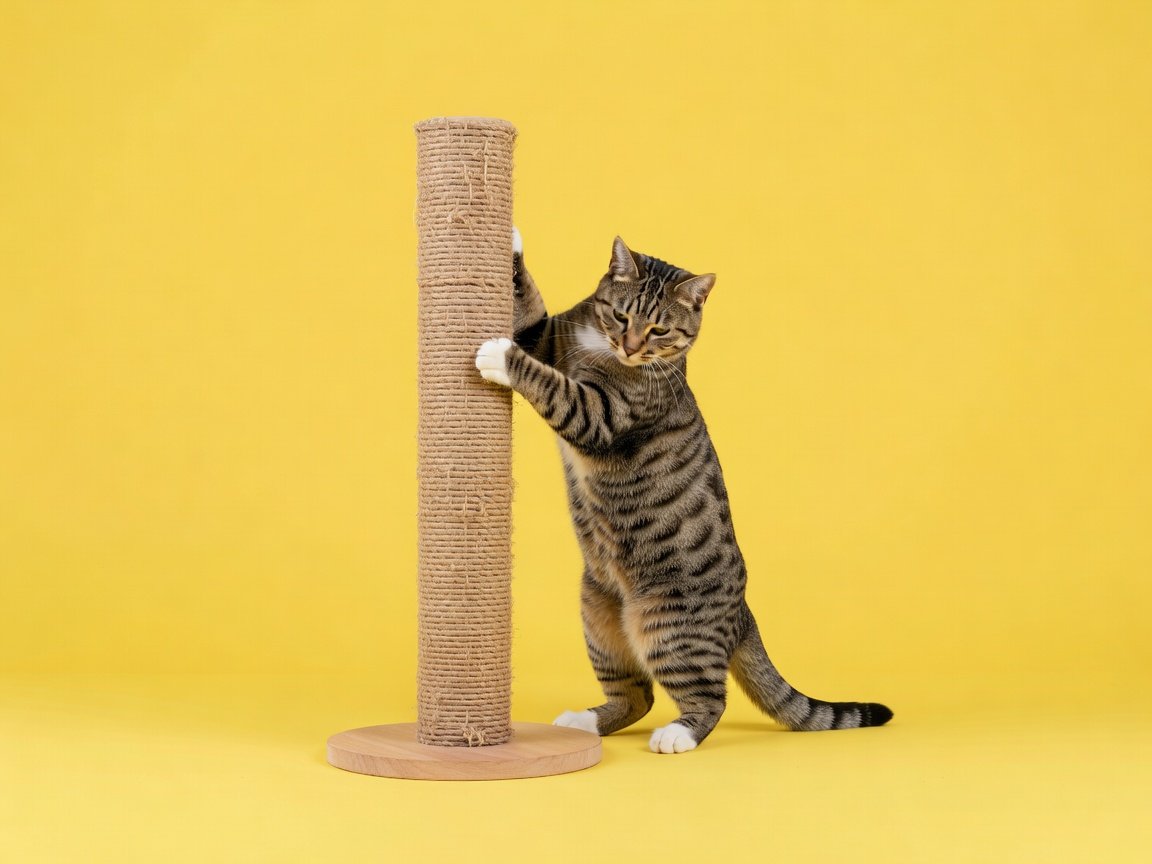
A good vertical post should be tall enough for your cat to stretch fully upright, with a heavy base that does not tip or wobble. A cat who feels the post move once will often avoid it afterward. Large breeds such as Maine Coons usually need extra height and a broader base.
Material matters
Cats have texture preferences, so offer a few and watch.
- Sisal rope or sisal fabric: durable and popular, and good for vertical posts.
- Corrugated cardboard: inexpensive, satisfying to rip, and often loved in flat or angled forms. It does shed bits, so expect some cleanup.
- Carpet-covered posts: many cats take to them, but they can teach a cat that carpet is fair game, so use with care if you have wall-to-wall carpeting.
- Wood or bark: appeals to some cats, especially those who like to scratch outdoor trees.
Match the angle to the habit
If your cat scratches the side of a couch standing up, a tall vertical post or a sturdy scratching tree is the best match. If they claw at the rug while stretched out, try a flat cardboard scratcher or an angled ramp style. When you are unsure, buy one of each and see which gets used.
Quantity counts
One scratcher in a whole home is rarely enough. Aim for at least one per main living area, more in multi-cat homes. Cats often like a choice, and having several reduces competition.
A tall sisal post such as the SmartCat Ultimate Scratching Post is a sensible starting point for cats who stretch up the side of furniture. Check the listed size against your cat's length when fully extended, and replace scratchers once they are too shredded to give good resistance.
Placement: Put the Scratcher Where the Scratching Already Happens
Placement is often the difference between a scratcher that gets used and one that collects dust. Cats scratch where they spend time and where they want to leave a mark, not in a far corner of the spare room.
Start right beside the target
Place the new scratcher directly against the corner or arm that is being damaged. If your cat shreds the left arm of the sofa, put the post flush against it. Once the cat is reliably using the post, you can move it a few inches at a time toward a better spot over days or weeks.
Think about the cat's routine
- Near sleeping spots: many cats stretch and scratch right after waking.
- Near the room's focal point: the living room, where the family gathers, is prime marking territory.
- By entrances and windows: good for cats who scratch when excited or when they see something outside.
- Away from noisy appliances: a scratcher beside a loud dryer or busy hallway can be avoided.
Make it stable and accessible
A scratcher that slides on hardwood will be abandoned quickly. Put a flat scratcher on a non-slip mat or brace a tall post against a wall or the furniture itself. Make sure older cats or those with stiff joints can reach it without jumping.
Make it inviting
Rub a little catnip or silvervine on the surface, or sprinkle some on the base. Not every cat responds to catnip, which is why having a second option helps. Dangle a toy against the post so your cat's first claws-in moment happens on the right surface.
Do not hide the old one too fast
If the old scratcher still works and the cat uses it, keep it. Replacing a favorite with something new and unfamiliar can backfire. Add the new item first, and only retire the old one once it is falling apart.
Make the Furniture Less Appealing (Without Scaring Your Cat)
While your cat learns the new routine, protect the furniture. The aim is not to frighten, only to make the old spot less satisfying than the new one.
Physical barriers that work
- Double-sided tape or adhesive strips: cats generally dislike a sticky feel on their paws. Products like Sticky Paws furniture strips are made for this. Test a hidden patch first, especially on delicate fabric or leather.
- Furniture protectors: clear plastic corner guards or vinyl shields cover the exact spot being scratched. They are useful for sofa corners and chair legs.
- Throw blankets or fitted covers: these shield fabric and can be washed. Tuck them in tightly so your cat cannot just scratch through.
- Temporary barriers: a piece of upside-down carpet runner or heavy foil on a corner can work for a short time.
Scents and sprays
Some cats dislike citrus smells, and commercial deterrent sprays exist. Results vary from cat to cat, and some sprays can stain upholstery or irritate sensitive noses. Never use essential oils on or near cats without veterinary guidance, because many are harmful to them. Pheromone diffusers designed for cats may help in some stress-related cases, but they are an aid, not a cure.
What to avoid
- Yelling or squirting water: this creates fear without teaching an alternative.
- Putting the cat in the scratcher forcibly: holding paws against the post can make them dislike it.
- Removing protection too early: keep deterrents in place until the new habit is solid, usually several weeks.
Clean the marked areas
Scent drives repeat scratching, so wipe the area with an enzymatic cleaner designed for pet messes. That reduces the scent cue that says "scratch here." If your cat has also been marking with urine, use an enzymatic odor remover such as Live Pee Free Pet Odor Eliminator, and talk to your vet if urine marking is new.
Think of protection as a temporary bridge. Once the scratcher is the clear favorite, you can usually remove most deterrents gradually.
Train With Rewards, Not Reprimands
Cats learn fastest when something good follows the behavior you want. The trick is to catch your cat doing the right thing, often.
Reward every scratcher visit
Keep a few treats nearby. When your cat uses the post, say a quiet "good" and give a treat or a gentle chin scratch right away. Within a few days, many cats start to head for the post on their own because it pays off.
Interrupt and redirect
If you see your cat starting to scratch the sofa, make a neutral sound, such as a light clap or calling their name, and then lure them to the scratcher with a toy or treat. Do this calmly. The point is to redirect, not scare.
Use play to build the habit
Drag a wand toy up and across the scratcher so your cat leaps and grabs it there. Many cats naturally dig their claws in when excited. A short play session before meals, ending with a snack, pairs the scratcher with good feelings.
Be consistent across the household
Everyone should respond the same way. If one person lets the cat scratch the couch and another corrects it, progress slows. Keep a simple rule: scratcher gets praise, sofa gets quiet redirection.
Keep expectations realistic
Some cats pick up a new scratcher within days. Others take weeks, especially if the sofa habit is long established. If a month goes by with no change, review the basics:
- Is the scratcher tall and stable enough?
- Is it right next to the problem spot?
- Does the cat seem to dislike the texture?
- Has anything stressful changed at home?
Kittens are usually easiest to train because they have no entrenched habit. Seniors with arthritis may scratch less, but they still need sturdy, low-effort options. If you adopted a cat who arrived with a strong scratching habit, patience and persistence matter more than any single product.
Nail Trims and Soft Caps: Reduce the Damage While You Train
Even the best plan leaves some scratching on the furniture in the early weeks. Regular nail care keeps the damage down and is good for your cat's comfort.
How to trim nails safely
Most cats do well with a trim every couple of weeks, though needs vary. Use clippers made for cats and trim only the sharp tip.
- Choose a calm moment, such as after a meal or a nap.
- Hold one paw gently and press the toe pad to extend the claw.
- Look for the pink quick inside the claw, which contains blood vessels and nerves.
- Clip only the clear tip, well before the quick.
- Stop after one or two paws if your cat gets restless, and finish later with a treat.
If you accidentally nick the quick, it may bleed a little. Stay calm and apply gentle pressure, and ask your vet about styptic powder to keep on hand. If you are unsure, ask your vet or a groomer to show you the first time.
Soft nail caps
Soft caps, like Soft Paws, are small vinyl covers glued onto trimmed claws. They blunt the claw so scratching does far less damage. They do not stop the urge to scratch and your cat will still need appropriate surfaces.
- Caps typically need replacing every month or so as nails grow and shed.
- Use the correct size, and follow the instructions closely.
- Check your cat's paws regularly for any caps that are loose, or any redness or irritation.
- Some cats dislike the application, so a vet or groomer can help with the first set.
Caps are a bridge during training, or a longer-term option for homes where damage is a real problem. They are not a substitute for scratchers, and they are not suitable for every cat.
If your cat spends time outdoors, ask your vet before using caps, because they can affect climbing and self-defense.
Never Declaw, and When to Call the Vet
Declawing is not a nail trim. It is a surgical amputation of the last bone of each toe, comparable to removing a person's fingers at the top knuckle. Major veterinary and animal welfare organizations discourage it, and it is banned or restricted in a number of places. Possible consequences include chronic pain, changes in the way the cat walks, and behavior problems such as biting or avoiding the litter box.
There is always a better option. Scratchers, trimming, protective covers and soft caps solve the problem without harming your cat. If someone suggests declawing as a quick fix, explain that you are working on a humane plan instead and ask your vet about alternatives.
When scratching signals something else
Most scratching is normal, but see your veterinarian if you notice:
- Sudden, excessive scratching or chewing of the paws
- Swollen, red, or bleeding toes, or a claw that looks torn or ingrown
- Limping, or reluctance to use a scratcher they used before
- Scratching combined with litter box changes, hiding, or loss of appetite
A cat who is stressed may scratch more, so look at recent changes such as a new pet, a move, or a schedule shift. Providing hiding spots, vertical space and predictable routines can help. Your vet can rule out pain or medical causes, and may refer you to a qualified behaviorist if the problem persists.
Keep costs manageable
If a vet visit or nail care appointment adds to your budget, a plan such as the Pet Assure Veterinary Discount Plan may be worth looking into. It is a discount membership, not insurance, so check which clinics near you participate and what the terms are.
With the right surfaces, good placement, temporary protection and a little patience, most households can keep both the sofa and the cat happy.
Helpful products to consider
SmartCat Ultimate Scratching Post
Helpful pickA tall, sisal-covered post designed so larger cats can stretch fully upright. A good first choice for cats who go after the arm or side of the sofa. Check the listed dimensions against your cat's size before buying.
PROS
- Tall enough for a full vertical stretch
- Sisal covering suits many cats
- Simple design that is easy to place beside furniture
CONS
- Takes up floor space
- Some cats prefer horizontal or angled surfaces
Sticky Paws Furniture Strips
Helpful pickClear, double-sided adhesive strips that go on the areas your cat scratches. Cats generally dislike the tacky feel on their paws, so they look elsewhere. Best used alongside an appealing scratcher nearby.
PROS
- Clear and fairly discreet on most furniture
- No smell or spray to worry about
- Works as a temporary training aid
CONS
- Needs replacing when dirty or worn
- Test a small hidden spot first on delicate fabrics
Soft Paws Nail Caps for Cats
Helpful pickSoft vinyl caps that glue over trimmed claws so scratching does less damage. They do not stop the urge to scratch, but they protect furniture and skin. Application can take patience, so consider a first try with a vet or groomer.
PROS
- Reduces damage while training is underway
- Non-surgical and reversible
- Available in several sizes and colors
CONS
- Must be replaced as claws grow and shed
- Some cats resist the application process
Frequently asked questions
How long does it take to stop a cat scratching furniture?
It varies. Some cats switch to a new scratcher within days, while cats with an established habit may take several weeks. Consistent placement beside the problem spot, rewards for using the scratcher and temporary furniture protection all speed things up. If nothing changes after a month, review the scratcher's height, stability and texture.
Is it okay to spray my cat with water for scratching?
It is best to avoid it. Water spraying tends to frighten cats without teaching them where to scratch, and they may simply scratch when you are out of sight. Redirect calmly to a scratcher and reward them when they use it. Positive reinforcement works better and protects your bond.
What is the best scratching post for a cat that scratches the couch?
Look for a tall, very stable post covered in sisal that lets your cat stretch fully upright, and put it right beside the couch. If your cat scratches horizontally, try a flat cardboard scratcher too. Offering both and watching which one gets used is the quickest way to find a winner.
Do soft paws nail caps hurt cats?
When sized and applied correctly, they are generally considered painless because they cover the claw rather than changing it. Some cats dislike the application, so go slowly and use treats. Check regularly for irritation or loose caps, replace them as nails grow, and ask your vet if you are unsure.
Can I stop an adult cat from scratching furniture, or only kittens?
Adult cats can absolutely learn. It may take longer because the habit is established, but the same steps work: suitable scratchers in the right spot, protection for the furniture, and rewards for good choices. Senior cats may need lower, easier-to-reach options, especially if they have stiff joints.