Some links on this page are affiliate links. If you buy through them we may earn a commission at no extra cost to you. How we make money.
Kitten proofing means getting down to kitten level and removing or blocking anything that can be chewed, swallowed, climbed, fallen from or licked. Prioritize cords, string-like items, lilies and other toxic plants, unscreened windows, appliances, small objects and medications or cleaners. Start in one safe room, then expand.
Key takeaways
- Get down to kitten level and walk through each room, then sort hazards into remove, block and supervise.
- Treat lilies as an emergency: any contact means calling a vet immediately, and it is safest not to own them.
- Secure cords, string, hair ties and other small swallowable items, and never pull string from a kitten's mouth or rear.
- Use tight, sturdy window screens, close washer and dryer doors, and check appliances before every use.
- Store medications, cleaners and antifreeze securely, and keep poison hotline and emergency vet numbers saved in your phone.
A kitten has no sense of danger and a lot of energy. At 10 weeks old, that combination means a phone charger is a chew toy, a dryer is a cozy cave and a vase of lilies is a salad bar.
The good news is that kitten proofing is mostly a one-time setup job. You are not trying to make your home sterile. You are removing the few hazards that cause the most serious injuries, then redirecting normal kitten behavior toward safe outlets.
This guide walks through the biggest risks room by room: cords, plants, windows, laundry, small objects and toxins. Do the walk-through before your kitten arrives, and repeat it every few months as they grow bolder.
Start With a Kitten's-Eye Walk-Through
The fastest way to find hazards is to see your home the way a kitten does. Get on your hands and knees and move slowly through each room. Look under furniture, behind the TV, along baseboards and inside cabinets. Anything dangling, shiny, crunchy, stringy or small enough to bat across the floor will get attention.
Then look up. Kittens climb sooner than most people expect, often by 8 to 10 weeks. Curtains, bookshelves, kitchen counters and the top of the refrigerator are all reachable once a kitten learns to scale fabric or leap from a chair.
Make a hazard list
Write down what you find and sort it into three groups:
- Remove: items you can put away for good, like toxic plants, loose threads and small decor.
- Block or cover: cords, gaps behind appliances, open cabinets and vents.
- Supervise only: things you cannot fully secure, such as a balcony door or a running dryer.
Pick a starter room
Most kittens do best when they begin in one small, fully proofed room, such as a spare bedroom or bathroom. Put in a litter box, food and water, a bed, a scratching post and a few toys. This gives your kitten a calm base while they learn the household sounds and smells, and it lets you proof one space thoroughly instead of the whole house at once.
Expand access gradually, one room at a time, only after you have repeated your walk-through there.
Check the little gaps
Kittens fit into places that seem impossible. Look for:
- Gaps behind the washer, dryer or refrigerator
- Openings under recliners and sofa beds
- Holes around pipes under sinks
- Space behind or under the oven drawer
- Open ductwork or loose vent covers
Block these with sturdy barriers or furniture placement. A kitten stuck behind an appliance can panic and get hurt, and rescue is stressful for everyone.
Finally, count your exits. Know where every door and window is, and tell everyone in the home that a kitten is arriving. Many escapes happen when a guest props open a door without thinking.
Cords, Strings and Small Objects
Kittens explore with their mouths, and teething makes chewing even more tempting. Electrical cords are a classic risk because a bite can cause burns in the mouth or a shock. Anything stringy or small is a swallowing risk too.
Taming cords
Start by reducing how many cords are visible and reachable.
- Run cords behind furniture or along baseboards using cord channels or covers.
- Use cable management boxes for power strips.
- Unplug chargers and small appliances when not in use, especially phone chargers and hair tools that dangle from outlets.
- Shorten blind and curtain cords by tying them up high or using cord winders. Looped blind cords can be a strangulation hazard.
If a kitten keeps targeting one cord, make it truly inaccessible rather than hoping a taste deterrent will solve it. Some cats ignore bitter sprays.
Stringy items are especially dangerous
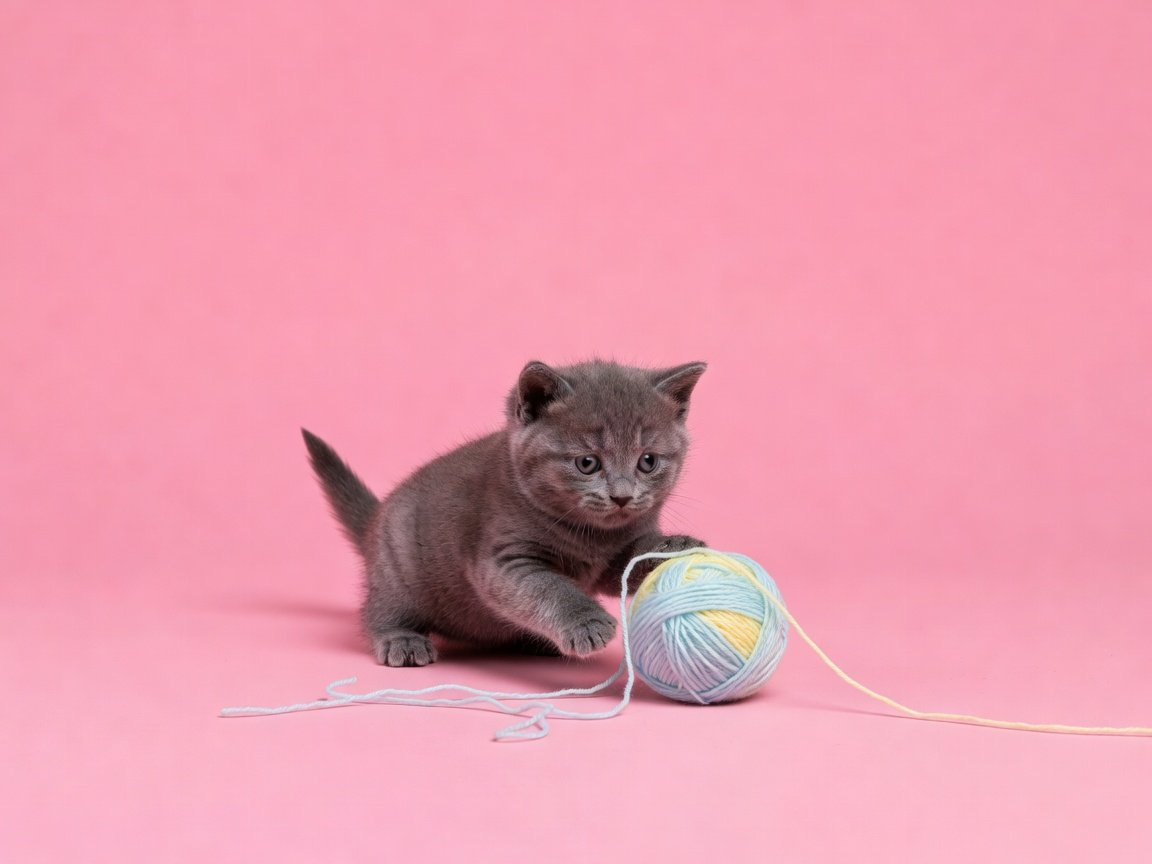
Thread, yarn, dental floss, ribbon, tinsel, rubber bands and hair ties can be swallowed. A long strand can anchor in the digestive tract while the gut keeps moving, which can cause a serious blockage called a linear foreign body. Do not pull a string if you see it hanging from your kitten's mouth or rear. Call your vet right away.
Store sewing supplies, fishing line and gift wrap in closed drawers. Save wand toys for supervised play and put them away afterward, since the string is the part kittens swallow.
Small objects around the house
If it fits in a bottle cap, it can be swallowed. Common culprits include:
- Hair ties and bobby pins
- Earplugs and earbud tips
- Coins, buttons and paper clips
- Rubber bands and bread-bag twist ties
- Small toy parts and craft supplies
- Pen caps and loose batteries
Batteries, especially small button batteries, are an emergency if swallowed or chewed. Do not wait for symptoms.
Use lidded trash cans, keep bathroom bins covered and put items away in drawers. A simple rule helps: if you would not want to see it come out of the kitten, put it up high or behind a door.
Plants: Lilies and Other Dangerous Greenery
Plants deserve a careful check, because some of the most dangerous ones look harmless and are common in bouquets.
Lilies are a true emergency
True lilies (Lilium) and daylilies (Hemerocallis) are highly toxic to cats. Easter lilies, tiger lilies, Stargazer lilies and Asiatic lilies are all concerns. Even small exposures, such as nibbling a leaf, licking pollen off fur or drinking vase water, can lead to kidney failure.
If your kitten has any contact with a lily, call a veterinarian or an emergency clinic immediately, even if the kitten seems fine. Early treatment matters. Do not wait for vomiting or lethargy to appear.
The simplest prevention is to keep lilies out of the home entirely. Tell friends and family not to send lily bouquets, and check mixed arrangements, since a single lily stem can be tucked in among other flowers.
Other plants to avoid or lock away
Many common houseplants can cause problems ranging from drooling and vomiting to severe organ damage. Examples frequently listed as toxic to cats include:
- Sago palm (very dangerous, including the seeds)
- Azalea and rhododendron
- Oleander
- Tulip and daffodil bulbs
- Pothos and philodendron (mouth irritation)
- Aloe vera
- Dieffenbachia
This is not a complete list. Check any plant you own against the ASPCA's toxic and non-toxic plant database before your kitten arrives.
Safer choices and setup
If you love greenery, consider plants generally listed as non-toxic to cats, such as spider plant, Boston fern or areca palm. Even safe plants can cause an upset stomach if eaten in quantity, and kittens love digging in soil.
Practical steps:
- Move toxic plants to a room the kitten can never enter, or give them away.
- Hang plants only if the kitten cannot jump to the planter or shelf.
- Cover soil with smooth stones or decorative mesh to discourage digging.
- Offer cat grass as a legal chewing option.
- Check outdoor patios and balconies too.
Keep the plant name or a photo of the tag handy. If something is chewed, your vet or a poison hotline will need to know exactly what it was.
Windows, Balconies and Doors
Kittens are fascinated by birds, bugs and moving shadows, and a window is often their favorite TV. That is fine as long as the window is secure.
Screens and falls
Vets use the term high-rise syndrome for injuries cats suffer from falling out of windows or off balconies. Even a fall from a low floor can cause serious harm.
A standard window screen is usually not strong enough to hold a cat leaping at a bird. Kittens can push through loose screens or tear them with their claws.
- Check that every screen fits tightly and has no tears.
- Use sturdy pet-rated screens or secure window guards where needed.
- Limit window openings to a narrow gap if you cannot reinforce the screen.
- Keep tilted or cracked windows from becoming a trap: a kitten can wedge into an opening and become stuck.
Balconies deserve extra caution. Unless the entire balcony is enclosed with cat-safe netting or a secured structure, treat it as off limits except during close supervision.
Blinds, curtains and glass
Blind cords are tempting and risky. Tie them out of reach. Heavy curtains can become climbing ropes, and kittens often shred lightweight drapes. Use window perches or a cat tree near a safe window instead, so your kitten has an appropriate vantage point.
Decorations matter too. Fragile glass items on sills can be knocked over, and some window treatments contain small weights or beads.
Doors and escape prevention
Many kittens are lost in the first weeks through an open door. Set up a routine:
- Tell guests and children to check for the kitten before opening an exterior door.
- Consider a baby gate or a door buffer zone for entrances.
- Make sure your kitten has an ID tag and, ideally, a microchip registered with your current contact details. Ask your vet about timing.
If your kitten does slip out, search nearby immediately, since newly escaped cats often hide close to home. Shake a treat bag, check under porches and bushes, and put up flyers if needed.
Finally, secure pet doors, fireplace screens and chimney flues, which can all become unexpected exits or hazards.
Kitchen, Bathroom and Laundry Hazards
Utility rooms are full of warm, enclosed spaces that kittens find irresistible. They are also where several preventable accidents happen.
Washers and dryers
A dryer is a cozy cave, and kittens can crawl in without being noticed. Make it a habit to:
- Keep washer and dryer doors closed at all times.
- Look inside, including the drum and the lint area, before every load.
- Say the kitten's name or check where they are before pressing start.
- Keep laundry baskets lidded or off the floor if the kitten likes burrowing.
Dirty clothing also smells like you, which makes it appealing. Socks and underwear are frequently swallowed, so keep them in a closed hamper.
Kitchen risks
Kittens jump onto counters faster than owners expect. Take these steps:
- Do not leave hot pans, knives, or foil-wrapped food on counters.
- Use stove knob covers or turn off the stove at the wall if your kitten can get to it.
- Use a trash can with a locking lid. Bones, string from meat roasts and food wrappers are all hazards.
- Store human foods in closed cabinets or containers.
Some foods are dangerous for cats, including onions, garlic, grapes and raisins, chocolate, alcohol, and anything sweetened with xylitol. Never leave plates unattended.
Child-proof latches on low cabinets help if you store cleaning supplies or medications there.
Bathroom basics
Bathrooms hide many hazards in one small room. Keep toilet lids closed (kittens can fall in and struggle to climb out) and empty buckets or tubs after use. Store razors, floss, cotton swabs, hair ties and medications in closed drawers. Shower curtain rings and dangling cords can also attract chewing.
Some toilet bowl cleaners and in-tank tablets can be harmful, so avoid them if the kitten has water access.
Reclining furniture and appliances
Recliners, sofa beds and folding chairs can injure a kitten who crawls inside. Check underneath before adjusting them. Also check the refrigerator, oven and any drawer before closing.
Toxins: Medications, Cleaners and Everyday Poisons
Many poisonings happen with ordinary products, not rare chemicals. Kittens are small, so even a tiny dose can matter.
Human and pet medications
Some of the most serious exposures involve medications left on nightstands or counters.
- Acetaminophen (Tylenol) is especially dangerous to cats.
- Ibuprofen, naproxen and other NSAIDs can damage the stomach and kidneys.
- ADHD medications, antidepressants and sleep aids can be life-threatening.
- Dog flea and tick products containing permethrin can be highly toxic to cats. Never use them on a kitten, and be careful if you also have a dog treated with one.
Keep pills in closed cabinets, not in open bags or on tables. A dropped pill vanishes quickly, so search the floor if one falls.
Cleaners and chemicals
Store these on high shelves or in latched cabinets:
- Bleach, drain cleaners and toilet cleaners
- Dish and laundry detergent pods
- Antifreeze, which is sweet and extremely dangerous
- Rodent bait and insecticides
- Paint thinners and solvents
Wipe floors with pet-safe products where possible, and let surfaces dry before the kitten walks on them. Many cleaners can irritate paws and skin, and cats groom the residue off.
Scents and diffusers
Cats can be sensitive to concentrated essential oils, especially tea tree, citrus and peppermint oils. Avoid using strong diffusers in a kitten's space, and never apply essential oils to their skin.
If you suspect poisoning
Act quickly:
- Remove the kitten from the source.
- Keep the product container, plant sample or pill bottle.
- Call your vet, an emergency clinic, the ASPCA Animal Poison Control Center (888-426-4435) or Pet Poison Helpline (855-764-7661). A consultation fee may apply.
- Do not induce vomiting unless a professional tells you to.
Note the time, estimated amount and your kitten's weight. That information helps professionals decide on treatment.
Build a Safe Setup That Prevents Trouble
Proofing is not only about removing things. A well-equipped space gives your kitten better options, so they are less likely to invent dangerous ones.
Provide outlets for energy
Bored kittens climb curtains and chew cords. Offer:
- A sturdy cat tree or shelves for climbing
- Two or three scratching surfaces, such as a vertical post and a flat cardboard scratcher
- Rotating toys, including balls, crinkle toys and puzzle feeders
- Two or more short play sessions a day with a wand toy, stored safely afterward
Place scratchers near spots the kitten already targets, like the edge of the sofa. Praise and treat when they use them.
Set up the litter area thoughtfully
Use a low-sided, uncovered or easy-entry box so tiny legs can climb in. Many kittens prefer a quiet but not isolated location, away from food and noisy appliances. Choose a litter that is safe for kittens. Some owners avoid clumping litters for very young kittens who may eat it, so ask your vet what suits your cat's age. Keep stain remover ready for early mistakes and clean thoroughly so scent does not invite repeats.
Plan for vet care
Schedule a first exam soon after adoption, ideally within the first week or so. Bring any previous records. Ask about vaccines, parasite prevention, microchipping and when spay or neuter fits your kitten's age. Costs can surprise new owners, so it helps to plan before an emergency.
Know your emergency signs
Contact a vet immediately if your kitten shows:
- Repeated vomiting or a hanging string
- Difficulty breathing
- Collapse or seizures
- Known exposure to lilies, medications or chemicals
- Straining in the litter box with little output
- Refusal to eat for a day or more
Save your regular vet and the nearest 24-hour emergency clinic in your phone.
Recheck as they grow
Kittens gain skill quickly. Repeat your walk-through every few weeks during the first months, and again whenever you bring in new furniture, plants or holiday decor. The goal is not perfection. It is catching the biggest risks before your kitten does.
Helpful products to consider
Feliway Classic Diffuser
Helpful pickA plug-in diffuser that releases a synthetic copy of a feline facial pheromone. Many owners use it in a kitten's safe room to help a new environment feel more familiar. It is a comfort aid, not a substitute for proofing or vet advice.
PROS
- Easy plug-in setup with no daily effort
- Odorless to most people
- Can be used in the kitten's starter room
CONS
- Results vary from cat to cat
- Refills are an ongoing cost
Live Pee Free Pet Odor Eliminator
Helpful pickKittens have accidents while learning the litter box, and thorough cleanup helps prevent repeat spots. An odor remover designed for pet messes is a useful item to have on hand before arrival. Always follow the label and test on hidden fabric first.
PROS
- Made specifically for pet urine odors
- Handy to keep ready before the kitten comes home
- Helps reduce lingering scent at accident spots
CONS
- Should be spot-tested on delicate fabrics
- Does not replace a vet visit if accidents persist
Pet Assure Veterinary Discount Plan
Helpful pickA veterinary discount plan, which is different from pet insurance. Kittens need early exams, vaccines and sometimes unexpected visits, so some owners look at plans like this to help manage routine costs. Check participating vets and current terms before you sign up.
PROS
- Not insurance, so no claim forms for covered visits
- Relevant for routine kitten care
- Worth comparing before your first vet appointment
CONS
- Only works at participating clinics
- Savings and terms vary, so confirm details first
Frequently asked questions
When should I start kitten proofing my home?
Start before your kitten comes home, ideally a few days ahead. Do a hands-and-knees walk-through, remove toxic plants, secure cords and set up one safe starter room. Then repeat the check every few weeks as your kitten grows more athletic and curious.
Are lilies really that dangerous to kittens?
Yes. True lilies and daylilies can cause acute kidney failure in cats, and even pollen on fur or vase water can be a problem. If your kitten contacts a lily, call a vet or emergency clinic immediately, even if they seem normal. Keeping lilies out of the home is safest.
How do I stop my kitten from chewing cords?
Make cords inaccessible first, using cord covers, channels or furniture placement, and unplug devices when not in use. Then give plenty of chew-safe toys and play time. Taste deterrents work for some cats but not all, so do not rely on them alone.
Do I need to proof every room at once?
No. Many owners begin with one fully proofed room containing the litter box, food, water, bed and toys. After your kitten is comfortable, expand access one room at a time, checking each space for hazards before opening it up.
What should I do if my kitten swallows string?
Do not pull on any string visible at the mouth or rear, because it may be anchored inside. Contact your veterinarian or an emergency clinic right away. Swallowed string, thread or ribbon can cause serious intestinal damage and should be treated as urgent.